

The Renters’ Rights Act explained
What property owners, portfolio managers and residential investors need to know.
The Renters’ Rights Act represents one of the most significant reforms to the private rented sector in a generation.
While many responsible landlords already meet the standards expected by the new legislation, the changes introduce a revised legal framework that places greater emphasis on compliance, transparency and professional property management.
Whether you manage a single residential development, a portfolio of investment properties or corporate accommodation, understanding the new requirements will help protect your assets while ensuring your properties remain compliant.
Key changes for property owners
The reforms include several significant changes, including:
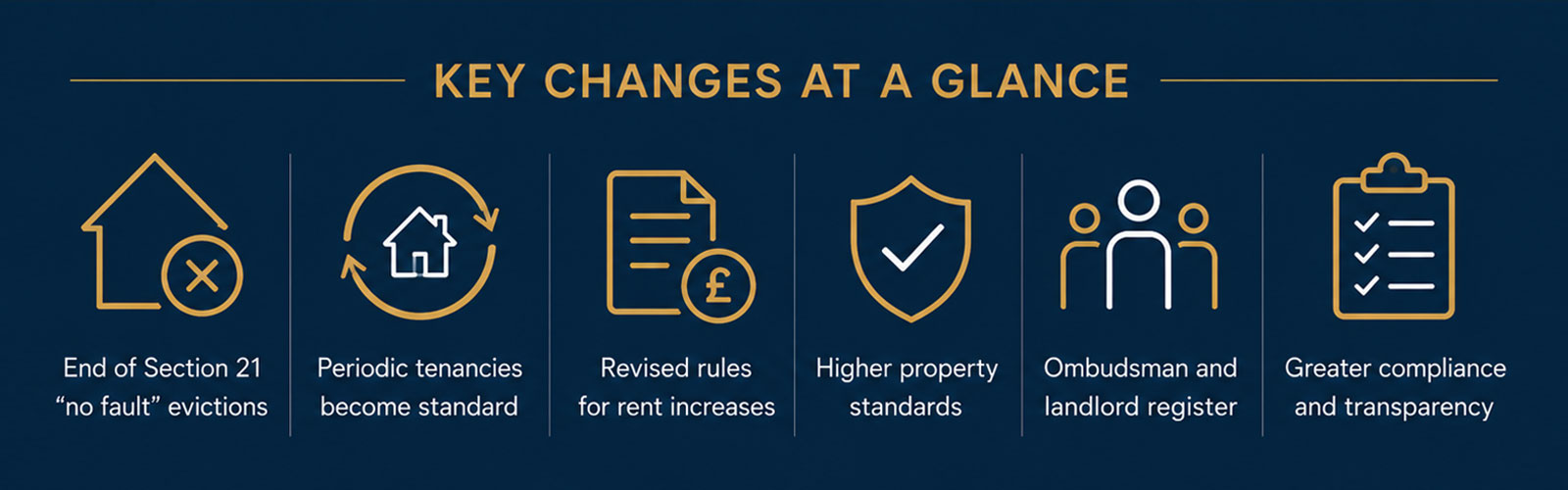
- The abolition of Section 21 “no fault” evictions
- Periodic tenancies becoming the default
- Revised procedures for rent increases
- Stronger expectations around property standards
- A Private Rented Sector Ombudsman and national landlord database
Taken together, these measures place greater emphasis on proactive management and clear communication throughout every tenancy.
A new framework for residential lettings
The legislation introduces important changes to tenancy management, possession procedures and landlord responsibilities.
Although the principles of good property management remain unchanged, owners will need to ensure that tenancy documentation, compliance procedures and property management practices reflect the new legal framework.
For professionally managed portfolios, these changes reinforce the importance of structured processes and accurate record keeping.


Good property management reduces risk
As regulatory requirements continue to evolve, professional management becomes increasingly valuable.
Regular inspections, accurate documentation, preventative maintenance and responsive communication all help reduce operational risk while supporting compliance with changing legislation.
For owners of larger portfolios, consistent management processes also help ensure standards
Preparation is better than reaction
The most effective response to legislative change is careful preparation.
Property owners should review tenancy agreements, maintain accurate records, ensure compliance obligations are met and keep maintenance programmes up to date.
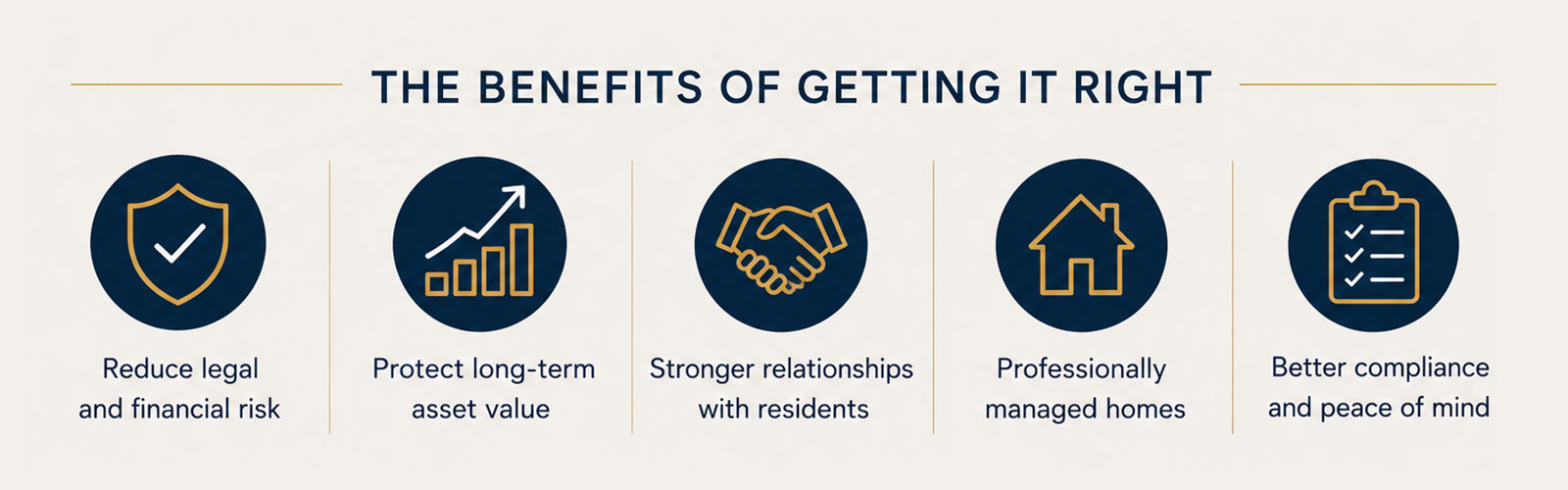
Planning ahead not only helps reduce legal risk but also protects long-term asset value while providing residents with professionally managed homes.

Professional advice adds long-term value
The Renters’ Rights Act reinforces a trend that has been developing for many years—successful residential property ownership increasingly depends upon professional management.
Rather than viewing compliance as an administrative burden, forward-thinking owners recognise that good governance, accurate documentation and proactive management all contribute to stronger investment performance and better resident experiences.
At KDG Property, we help property owners, investors and corporate clients navigate an increasingly complex regulatory environment. Through professional management, accurate documentation, proactive maintenance and ongoing compliance monitoring, we help clients protect their investments while ensuring their residential assets continue to meet evolving legal requirements.
Whether managing an individual development or a substantial residential portfolio, our experienced team provides the practical support and strategic oversight needed to manage property with confidence.
The KDG Perspective
Legislation will continue to evolve, but the principles of successful property management remain constant. Professional oversight, clear communication and proactive planning not only support compliance—they help protect long-term asset value. At KDG Property, we believe good management is about staying ahead of change rather than simply responding to it.
