

The hidden cost of reactive property management
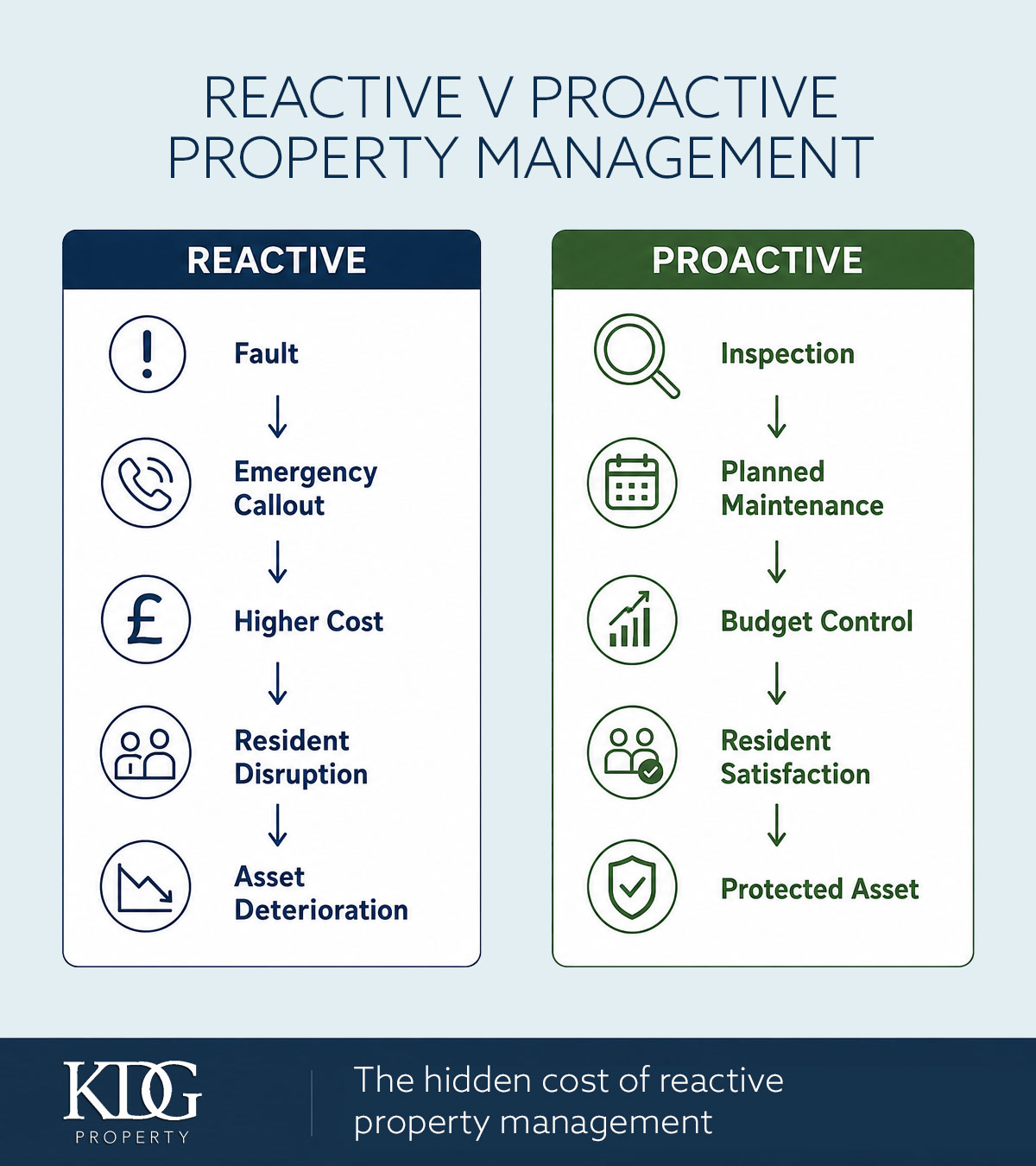
Reactive property management is often perceived as a practical way of controlling costs. Why carry out work today if nothing has actually failed?
In reality, the opposite is frequently true.
Professional property management is built on the understanding that buildings continually evolve. Components deteriorate, services age and maintenance requirements develop gradually over time.
The question is not whether investment will be needed, but whether it is planned or forced by failure.
For property owners, investors and portfolio managers, a proactive approach reduces financial risk, protects long-term asset value and provides greater certainty when planning future expenditure.
The cost of waiting
Small maintenance issues rarely remain small for long.
A slipped roof tile can become water damage. A minor plumbing defect may lead to replacement flooring and redecoration. Neglected communal areas can influence resident satisfaction and the overall perception of an entire development.
The greatest cost is often not the repair itself but the delay in addressing it.
Emergency repairs typically require immediate contractor attendance, disrupt residents and place unexpected pressure on maintenance budgets. Planned works, by comparison, can be coordinated efficiently, reducing both cost and operational disruption.
However, the financial cost is only part of the picture. Reactive management can also lead to:
- Greater operational disruption
- Increased compliance risks
- Higher insurance claims
- Pressure on maintenance budgets
- Reduced resident confidence
- Damage to the long-term reputation of a development
These hidden costs often exceed the original maintenance expenditure that could have prevented the problem in the first place.
Better information creates better decisions
Professional management relies on accurate information.
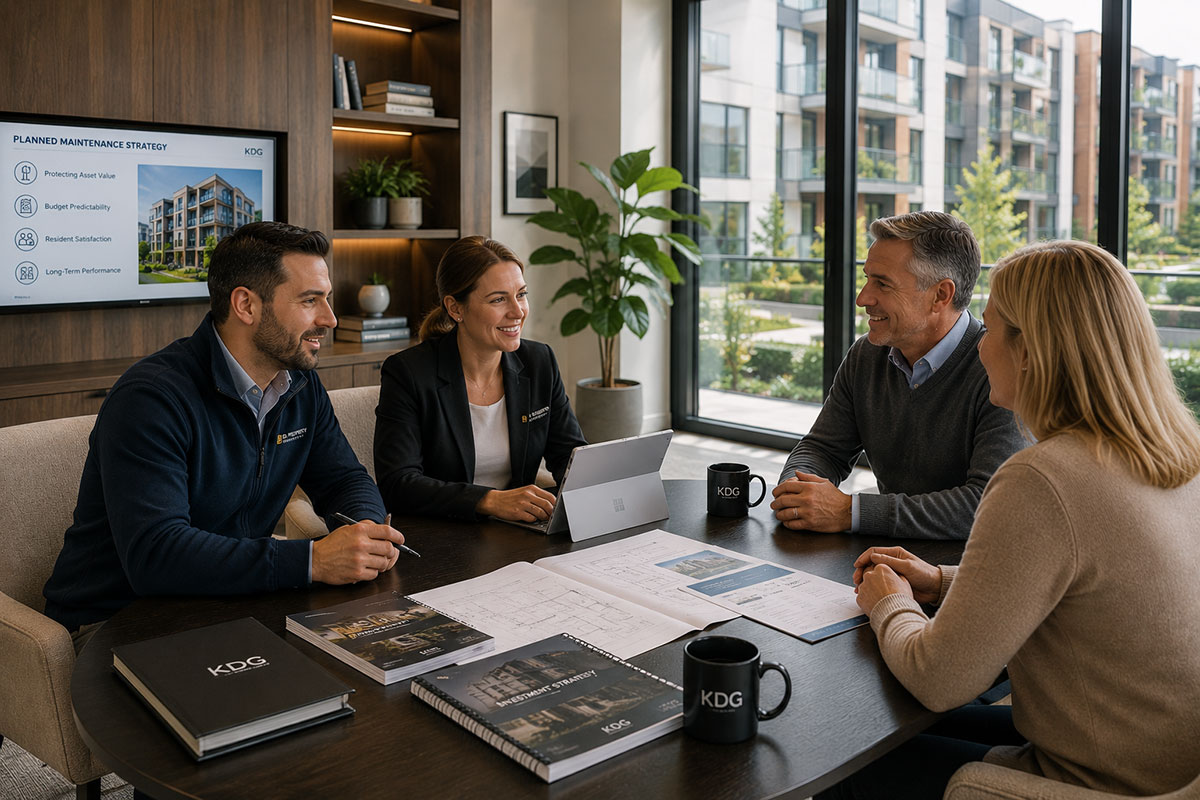
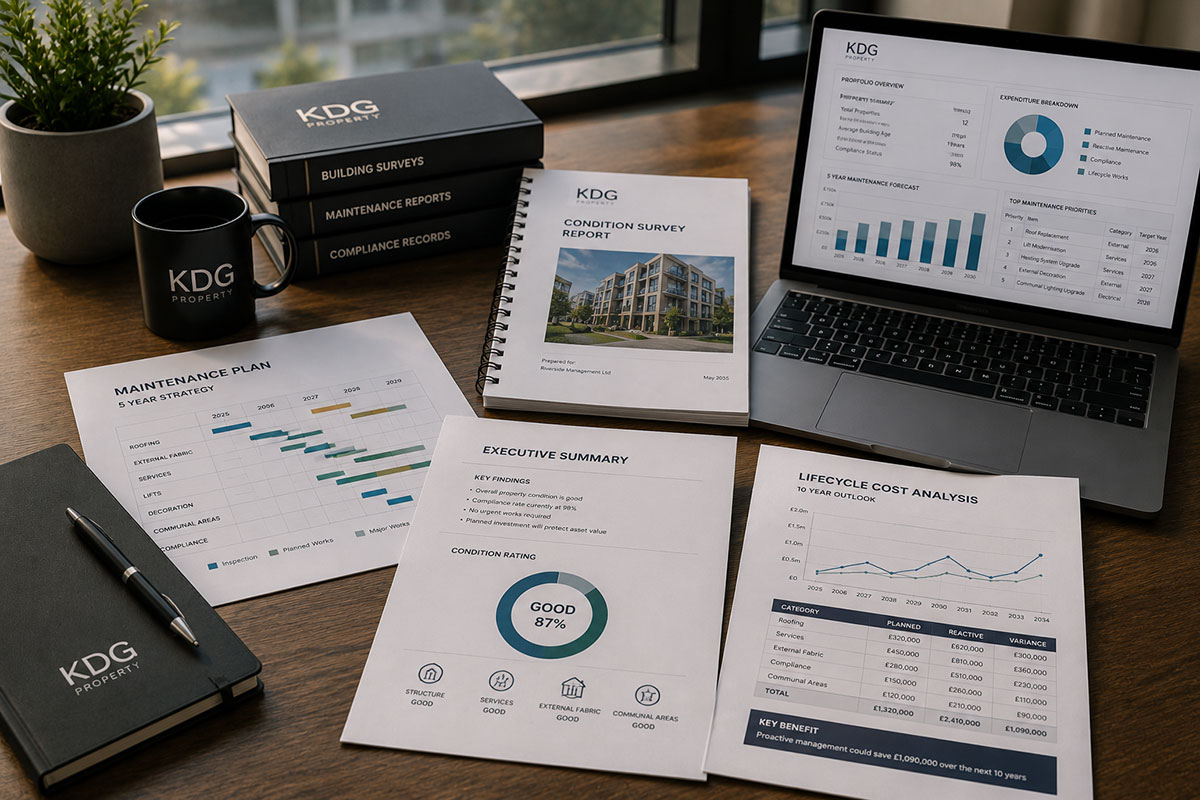
Inspection reports, maintenance records and condition surveys provide valuable insight into how buildings are performing and where future investment should be directed.
Combined with trusted contractor relationships and planned maintenance programmes, this information enables owners to make informed decisions based on long-term asset performance rather than reacting to individual maintenance issues.
Proactive management delivers better outcomes
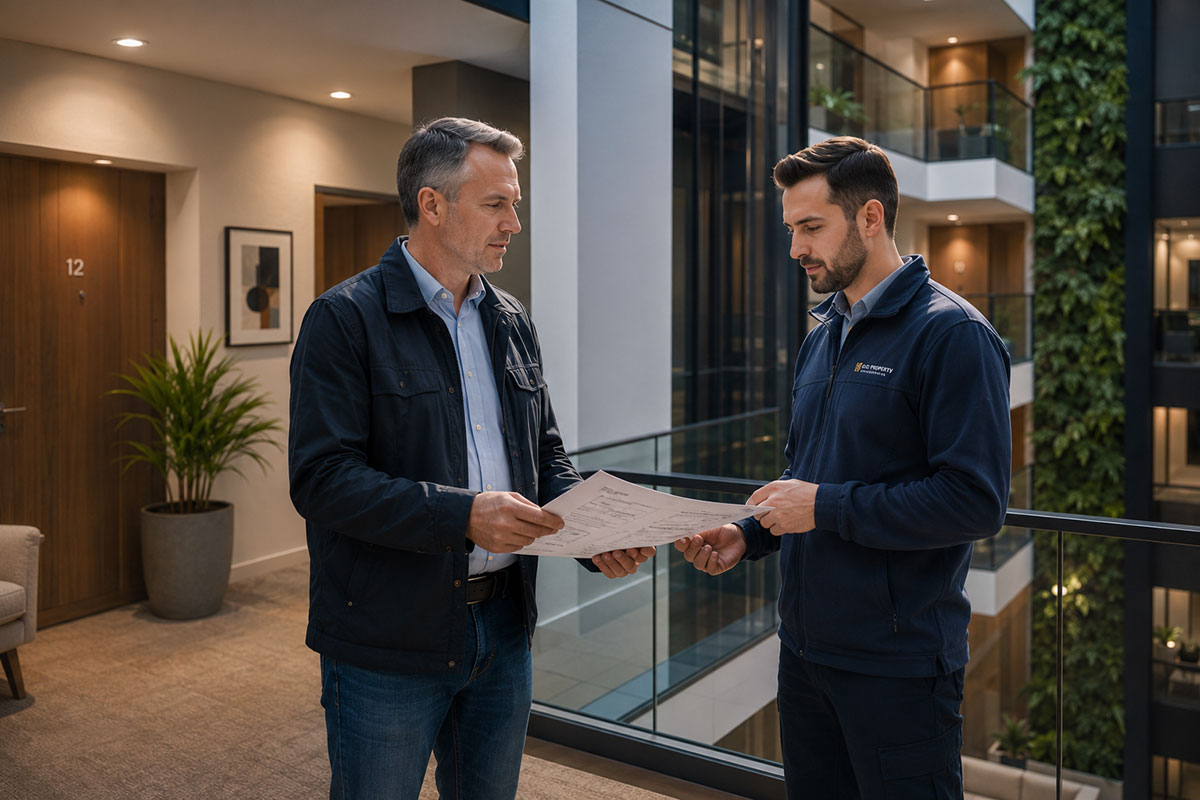
Successful property management is about anticipating future requirements rather than simply responding to problems.
Regular inspections, condition surveys and lifecycle planning allow owners to identify maintenance priorities before defects begin affecting building performance or resident experience.
This strategic approach supports:
- Better financial forecasting
- Reduced emergency expenditure
- Longer asset lifecycles
- Improved resident satisfaction
- Greater resilience to future maintenance demands
Across larger residential portfolios, these benefits become increasingly significant.
A strategy that protects more than buildings
Professional property management is ultimately about protecting long-term investment performance.
Through planned inspections, preventative maintenance, structured reporting and forward-looking asset planning, owners gain greater control over expenditure while improving the quality, resilience and long-term value of their residential assets.
The most successful developments are rarely those that spend the least on maintenance. They are the ones that invest at the right time.
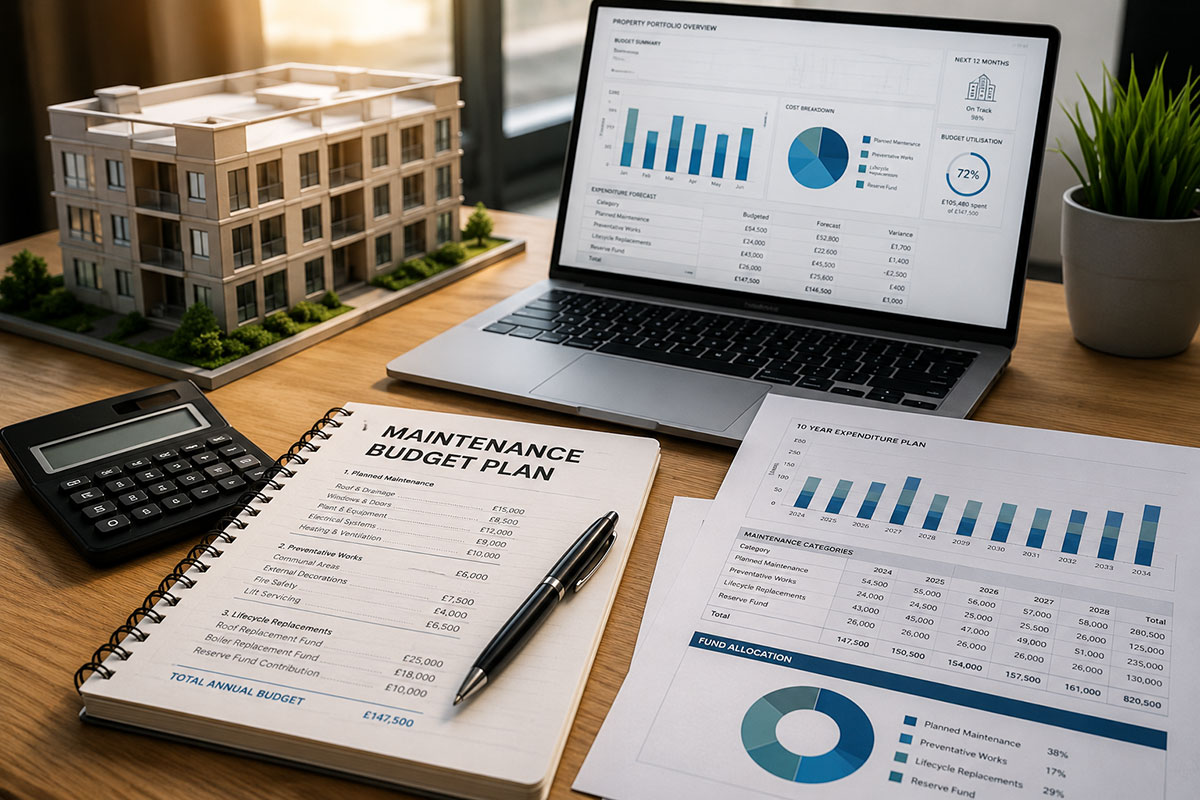
At KDG Property, we believe successful property management begins long before a repair becomes necessary.
By combining regular inspections, planned maintenance programmes, trusted contractor partnerships and proactive communication, we help clients reduce operational risk, improve budget certainty and protect the long-term value of their residential assets.
Whether managing an individual development or an extensive residential portfolio, our approach remains the same—anticipating tomorrow’s challenges rather than simply responding to today’s.
The KDG Perspective
The true measure of professional property management is not how effectively problems are solved, but how many are prevented altogether. Through strategic planning, structured maintenance and long-term thinking, we help property owners move beyond reactive maintenance towards a more resilient and sustainable approach to residential asset management.
